

Most German universities offer high quality teaching, world-class facilities, courses in English, and internationally recognised degrees.
Tuition is also state funded at Germany’s public universities and colleges.
The only additional charge for non-EU/EEA international students is a small “semester fee” of between €100 and €300. That is except in the state of Baden-Württemberg -- home to Heidelberg University -- which levies a fee of €1,500 per semester on non-EU/EEA students.
But which courses, and universities, offer the best prospect of a high-flying career?
It's no big secret that to land a high-paying job in Germany, you'd be well advised to study something in the field of engineering or IT.
In an effort to advise the next generation of skilled workers who may want to emigrate to Germany, the Nigerian newspaper Vanguard recently compiled a list of the top courses to study with high employment opportunities in the country. Unsurprisingly, six out of ten of those subjects fell into the IT or engineering fields.
But arguably as important as picking the right subject to study is picking the right university. After all, the school you enrol in determines the quality of your courses as well as the peers you're exposed to, and often also the opportunities you'll get upon graduation.
With all of that in mind, here's The Local's guide to the subjects that are ideal for those looking to secure a well-paid job in Germany after their studies -- and a few of the top German institutions for studying them.
READ ALSO: The best-paid jobs you can get without a university degree in Germany
Note that the institutions listed here are internationally recognised in the fields indicated, but they’re only the tip of the iceberg. With roughly 400 universities and technical colleges, Germany has something to offer everyone.
Visit the DAAD website for a comprehensive overview. All salary estimates are from Payscale.
Engineering
A recognised global centre of excellence for all things engineering, Germany is home to industrial giants including Siemens, Bosch, Volkswagen, and BMW.
Graduates in engineering from universities including the Technical University (TU) of Munich, RWTH Aachen University, and Karlsruhe Institute of Technology are at the heart of Germany’s energy transition, as well as numerous new developments in automation.
Courses in mechanical engineering, electronic engineering, automotive engineering and environmental engineering place a strong emphasis on research, design, and real-world applications.
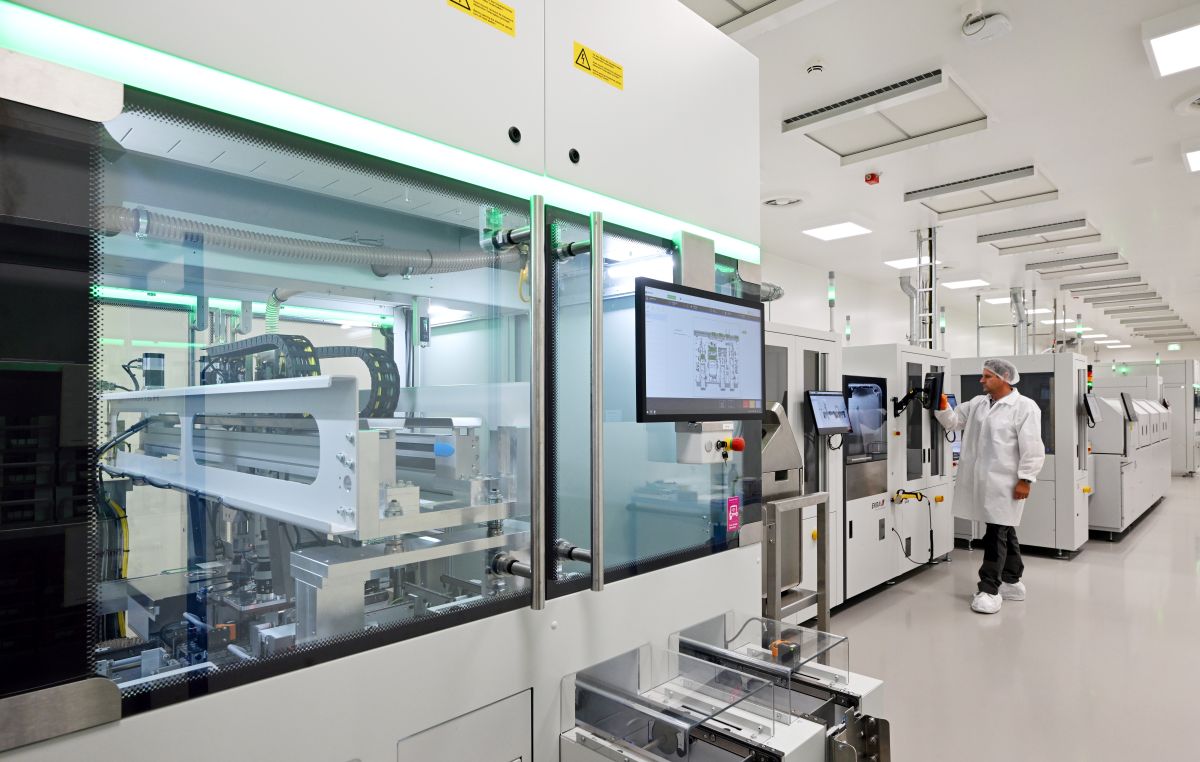
According to Payscale, the average salary for an engineer in Germany in 2025 ranges from €44,000 for an environmental engineer to €57,000 for an automotive engineer.
TU Berlin, the University of Erlangen Nuremberg, and TU Dresden are particularly well-regarded for electrical engineering.
For budding automotive engineers, TU Munich, the University of Stuttgart, and Wolfsburg University of Applied Sciences have strong connections with BMW, Mercedes Benz, and VW respectively – offering access to potential internships and entry-level positions.
READ ALSO: Weimar to Heidelberg - The best German university towns for foreign students
Computer science, IT, and machine learning
Like engineering, computer science is a catch-all term covering a range of university courses and an even greater variety of career opportunities, from IT and AI to cybersecurity and software development.
Germany is currently investing heavily in digitalisation and AI across sectors including finance, logistics and health – and leading universities typically partner with start-ups and multinationals to provide hands on experience as well as pathways into rewarding tech roles.
According to Payscale, the average salary for a computer scientist in Germany is currently €55,000.
According to the Study in Germany website, TU Munich, TU Berlin, RWTH Aachen University, the University of Munich, and Karlsruhe Institute of Technology are the top five institutions in Germany for a degree in computer science.
Architecture
There are times when it feels as if all of Germany is a building site. With ambitious plans to add to the country’s housing stock, as well as to modernise and re-purpose existing buildings, there are numerous opportunities for ambitious young architects.
Graduates who want to work abroad will also benefit from the focus at German universities on green design, urban planning, and energy efficiency.
Arch20 has a useful list of the top ten architecture schools in Germany, featuring Weimar University, Brandenburg University, and Wuppertal University.
The average salary for an architect in Germany is €39,000.
Business Administration & Management
As with engineering and computer science, German universities offering business administration courses make a point of encouraging students to gain as much hands-on experience as possible.
Courses typically begin by covering the basics of economics, marketing, and accounting, before offering students an opportunity to focus on a specific area.
The University of Mannheim, the Frankfurt School of Finance and Management, and the School of Business & Economics at Berlin’s Free University are all renowned for their business administration courses.
Payscale estimates that the average salary for business administration graduates in Germany is €55,000 – but, as with many of the jobs listed here, the sky’s the limit.
Medicine, Healthcare & Psychology
Germany is currently suffering from a well-publicised and acute shortage of doctors and healthcare professionals.
A strong command of German is required to study many of these subjects in Germany (more so than for subjects such as engineering or computer science), but international students willing and able to make the effort are almost guaranteed to walk into a secure position on graduation.

While psychology is currently one of the most popular fields of study in Germany, the number of graduates does not seem to be slowing demand in the workplace.
Depending on the area students choose to focus on, a degree in psychology can lead to opportunities across a range of different fields – including healthcare and counselling, as well as jobs in the private sector such as human resources, market research, and marketing.
The average wage for psychology graduates varies wildly depending on the chosen career path. As a general rule, however, a career in business tends to attract the highest salary.
There are many renowned medical schools in Germany, including Heidelberg University, the Charité in Berlin, and the University of Lübeck.
Ludwig-Maximilian University in Munich, Humboldt University in Berlin, and the University of Mannheim enjoy similarly stellar reputations for psychology.
Comments (1)